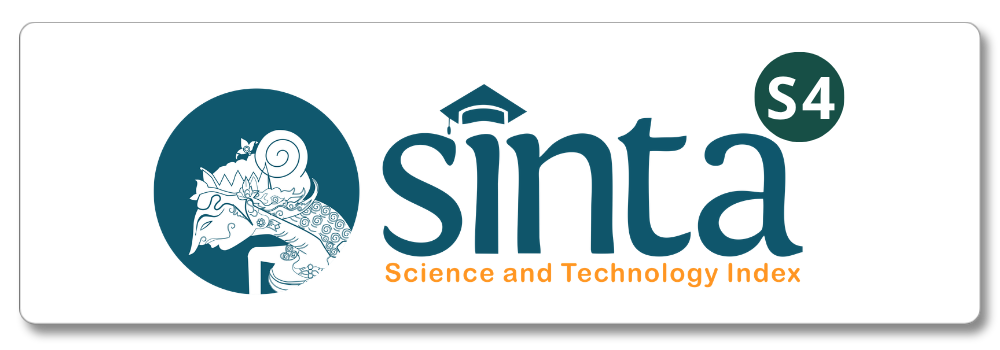
The Effectiveness of Integrating Learning Management to Online Project-Based Learning on Students' Metacognitive Abilities

Abstract
Metacognition is one of the important components to measure student learning achievement in the university. Metacognition knowledge can significantly measure students' critical thinking skills, especially in solving problems. The ability to solve problems serves as a bridge among metacognition as well as educational success. This study aims to determine metacognitive knowledge on the ability to solve complex problems in social geography. The sample of the research sample were 163 divided into two control and experimental groups. The experimental class used online project-based learning, and the control group used conventional learning. The instrument used to collect the metacognitive data uses was learning and Study Strategies Inventory (LASSI) adapted to the characteristics of students. By 77 items of LASSI were 48 items were valid and reliable used in this study. The result showed that the experimental group using online project-based learning had better metacognitive knowledge, especially on variables that had significant differences of p < 0.05, such as Information Processing, Attitude, Motivation, Self-Testing and Aids Studies. Furthermore, differences in the ability to solve complex problems of social geography are discussed in this study.
Downloads
References
Abbad, A., Burattin, A., Slaats, T., Kindler, E., & Weber, B. (2020). On the declarative paradigm in hybrid business process representations: A conceptual framework and a systematic literature study. Information Systems, 91, 1-10. https://doi.org/10.1016/j.is.2020.101505
Alejandro, A. (2015). Metacognition: Fundaments, applications, and trends. Springer International Publishing Switzerland.
Alfaiz, A., Hidayah, N., Hambali, I. M., & Radjah, C. L. (2019). Human agency as a self-cognition of human autonomous learning: A synthesized practical of agentic approach. Journal of Social Studies Education Research, 10(4), 370–391.
Asy’ari, M., Ikhsan, M., & Muhali. (2019). The effectiveness of inquiry learning model in improving prospective teachers’ metacognition knowledge and metacognition awareness. International Journal of Instruction, 12(2), 455–470. https://doi.org/10.29333/iji.2019.12229a
Babatunde, A., & Emrah, S. (2020). COVID-19 pandemic and online learning: The challenges and opportunities. Interactive Learning Environments, 31(2), 863-875. https://doi.org/10.1080/10494820.2020.1813180
Bafadal, I., Nurabadi, A., Sobri, A. Y., & Gunawan, I. (2019). The competence of beginner principals as instructional leaders in primary schools. International Journal of Innovation, Creativity and Change, 5(4), 625–639.
Banabed, A., & Bekki, C. (2021). Investigating teachers’ and learners’ metacognitive awareness and effective practice: University students as a sample. Journal of Faslo El-Khitab, 10, 293–312.
Bourn, D. (2018). Understanding global skills for 21st century professions. Palgrave Macmillan.
Bozkurt, A., & Sharma, R. C. (2020). Emergency remote teaching in a time of global crisis due to corona virus pandemic. Asian Journal of Distance Education, 15(1), 1-4. http://dx.doi.org/10.5281/zenodo.3778083
Chang, C., Colón-Berlingeri, M., Mavis, B., Laird-Fick, H. S., Parker, C., & Solomon, D. (2021). Medical student progress examination performance and its relationship with metacognition, critical thinking, and self-regulated learning strategies. Academic Medicine, 96(2), 278–284. https://doi.org/10.1097/ACM.0000000000003766
Christoph, C., Nils, H., Sascha, S., Wüstenberg, W., & Samuel, G. (2016). Assessment of complex problem solving: What we know and what we don’t know. Applied Measurement in Education, 29(4), 265-277. http://dx.doi.org/10.1080/08957347.2016.1209208
Concina, E. (2019). The role of metacognitive skills in music learning and performing: Theoretical features and educational implications. Frontiers in Psychology, 10, 1–11. https://doi.org/10.3389/fpsyg.2019.01583
Farah, N., & Ayoubi, Z. (2020). Enhancing the critical thinking skills of grade 8 chemistry students using an inquiry and reflection teaching method. Journal of Education in Science, Environment and Health, 6(3), 207–219. https://doi.org/10.21891/jeseh.656872
Huang, J., & Yip, J. W. C. (2021). Understanding ESL teachers’ agency in their early years of professional development: A three-layered triadic reciprocity framework. Frontiers in Psychology, 12, 1-29. https://doi.org/10.3389/fpsyg.2021.739271
Hodges, C., Moore, S., Lockee, B., Trust, T., & Bond, A. (2020). The difference between emergency remote teaching and online learning. Educause Review.
Inkinen, J., Klager, C., Juuti, K., Schneider, B., Salmela-Aro, K., Krajcik, J., & Lavonen, J. (2020). High school students’ situational engagement associated with scientific practices in designed science learning situations. Science Education, 104(4), 667–692. https://doi.org/10.1002/sce.21570
John, P., Lundie, D., & Golder, G. (2019) Metacognition in schools: What does the literature suggest about the effectiveness of teaching metacognition in schools?. Educational Review, 71(4), 483-500. http://dx.doi.org/10.1080/00131911.2018.1441127
Kim, M., & Jerine, P. (2019). Case analysis of children's reasoning in problem-solving process. International Journal of Science Education, 41(6), 739-758. http://dx.doi.org/10.1080/09500693.2019.1579391
Kozikoğlu, İ. (2019). Investigating critical thinking in prospective teachers: Metacognitive skills, problem solving skills and academic self-efficacy. Journal of Social Studies Education Research, 10(2), 111–130.
Krajcik, J., & Shin, N. (2015). Project-based learning. in k. sawyer (ed.), The Cambridge Handbook of The Learning Sciences (2nd ed., pp. 275–297). Cambridge University Press.
Linda, D., & McDowell, M. (2019). The roles of motivation and metacognition in producing self-regulated learners of college physical science: A review of empirical studies. International Journal of Science Education, 41(17), 2524-2541. http://dx.doi.org/10.1080/09500693.2019.1689584
Muenks, K., Canning, E. A., LaCosse, J., Green, D. J., Zirkel, S., Garcia, J. A., & Murphy, M. C. (2019). Does my professor think my ability can change? Students’ perceptions of their STEM professors’ mindset beliefs predict their psychological vulnerability, engagement, and performance in class. Journal of Experimental Psychology: General Manuscript, 18(6), 1–88.
Muliyah, P., & Aminatun, D. (2020). Teaching english for specific purposes in vocational high school: teachers’ beliefs and practices. JET (Journal of English Teaching), 6(2), 122–133. https://doi.org/10.33541/jet.v6i2.1756
Mulrey, B. C. (2016). Increasing social problem solving skills in early childhood. Dissertation Doctorate of Education. Pro Quest LLC.
Ozturk, N. (2017). An analysis of teachers’ self-reported competencies for teaching metacognition. Educational Studies, 43(3), 247–264. http://dx.doi.org/10.1080/03055698.2016.1273761
Padmanabha, C. H. (2020). Metacognition: Conceptual framework. I-Manager’s Journal on Educational Psychology, 14(1), 1-11.
Paulina, P., Sepulveda, E., & Astrid, M. (2020) Online teaching placement during the COVID-19 pandemic in chile: Challenges and opportunities. European Journal of Teacher Education, 43(4), 587-607. http://dx.doi.org/10.1080/02619768.2020.1820981
Pelton, J. A. (2019). Teaching about learning: The effects of instruction on metacognition in a sociological theory course. Teaching Sociology, 47(4), 325–338. https://doi.org/10.1177/0092055X19861684
Prastiawan, A., Gunawan, I., Putra, A. P., Dewantoro, D. A., Cholifah, P. S., Nuraini, N. L. S., Rini, T. A., Pradipta, R. F., Raharjo, K. M., Prestiadi, D., & Surahman, E. (2020). School leadership skills in educational institutions. Proceedings of the 6th International Conference on Education and Technology (ICET 2020), 501, 438–441. https://doi.org/10.2991/assehr.k.201204.085
Puspita, D., & Amelia, D. (2020). Ted-Talk: A supplement material to promote students’ autonomy in listening. ELTIN Journal, 8(2), 91–102. https://doi.org/10.22460/eltin.v8i2.p91-102
Putwain, D. W., Nicholson, L. J., & Edwards, J. L. (2015). Hard to reach and hard to teach: Supporting the self- regulation of learning in an alternative provision secondary school. Educational Studies, 42(1), 1–18. https://doi.org/10.1080/03055698.2015.1108839
Senol, S. (2016). The effect of different metacognitive skill levels on preservice chemistry teachers’ motivation. Cypriot Journal of Educational Sciences, 11(3), 136–143. http://dx.doi.org/10.18844/cjes.v11i3.694
Sitorus, I. S., Sihotang, D. O., Hutabarat, W., & Daryanto, E. (2020). Competency planning strategies of junior high school teachers in increasing competitiveness. Proceedings of the 5th Annual International Seminar on Transformative Education and Educational Leadership (AISTEEL 2020), 488, 236–241. https://doi.org/10.2991/assehr.k.201124.050
Siswanto, E., & Hidayati, D. (2020). Management indicators of good infrastructure facilities to improve school quality. International Journal of Educational Management and Innovation, 1(1), 69-73. https://doi.org/10.12928/ijemi.v1i1.1516
Tajuddin, M. R. A., Yaacob, A., & Rahman, F. A. (2021). Self-efficacy practice in oral presentation through self- reflection among pre-service teachers in institute of teacher education. South Asian Journal of Social Sciences and Humanities, 2(3), 189–202. https://doi.org/10.48165/sajssh.2021.2312
Tang, L. (2016). On metacognitive strategy use for college students in english listening teaching. Theory and Practice in Language Studies, 6(7), 1437–1443. http://dx.doi.org/10.17507/tpls.0607.15
Teng, L. S. (2021). Individual differences in self-regulated learning: Exploring the nexus of motivational beliefs, self-efficacy, and SRL strategies in EFL writing. Language Teaching Research, 1-11. https://doi.org/10.1177/13621688211006881
Teng, M. F., Qin, C., & Wang, C. (2022). Validation of metacognitive academic writing strategies and the predictive effects on academic writing performance in a foreign language context. Metacognition and Learning, 17(1), 167–190. https://doi.org/10.1007/s11409-021-09278-4
United Nations Educational Scientific and Cultural Organization. (2020). Education for sustainable development: A roadmap. UNESCO.
Vicki, L., & Slava, K. (2015). Instruction first and problem solving first approaches: Alternative pathways to learning complex tasks. Instructional Science, 45, 195-219.
Wong, I. H. M., & Wong, T. T. Y. (2021). Exploring the relationship between intellectual humility and academic performance among post-secondary students: The mediating roles of learning motivation and receptivity to feedback. Learning and Individual Differences, 88, 1-22. https://doi.org/10.1016/j.lindif.2021.102012
Yiling, H., Bian, W., & Xiaoqing, G. (2017). Learning analysis of K-12 students’ online problem solving: A three- stage assessment approach. Interactive Learning Environments, 25(2), 262-279. http://dx.doi.org/10.1177/0735633119887187
Zhao, N., Teng, X., Li, W., Li, Y., Wang, S., Wen, H., & Yi, M. (2019). A path model for metacognition and its relation to problem solving strategies and achievement for different tasks. ZDM: The International Journal on Mathematics Education, 51(6), 641-653. http://dx.doi.org/10.1007/s11858-019-01067-3
Zohar, A., & Barzilai, S. (2013). A review of research on metacognition in science education: current and future directions. Studies in Science Education, 49(2), 121-169. https://doi.org/10.1080/03057267.2013.847261
Copyright (c) 2023 Studies in Learning and Teaching

This work is licensed under a Creative Commons Attribution-NonCommercial-NoDerivatives 4.0 International License.