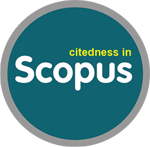
The Effect of Experiential Learning on the Ability to Recognize Patterns and Cooperation in Children Aged 4-5 Years

Abstract
The results of initial observations conducted at KB Talia Insan Mulia found that the ability to recognize patterns and cooperation was still underdeveloped. For this reason, the author wants to develop Experiential Learning through playing Maze to improve the ability to recognize patterns and cooperation. The purpose of this study is to determine the effect of experiential learning on the ability to recognize patterns and cooperation in children aged 4-5 years. This study uses quantitative research using experimental methods. This study involved 30 early childhood subjects aged 4-5 years, 14 female subjects or 46.66%, 16 male subjects or 53.34%. The instruments in this study were pattern recognition ability observation sheets and cooperation ability observation sheets. The data analysis technique in this study used descriptive analysis with JASP 0.19.10 and non-parametric statistics with the Mann-Whitney U test. The test result shows that p is smaller than 0.05 which means the hypothesis is accepted. Experiential learning has an effect on the ability to recognize patterns and cooperation in children aged 4-5 years. The experiential learning method is expected can become the main strategy in learning in PAUD.
Downloads
References
Bartels, K. P. R. (2023). Experiential learning: a relational approach to sustaining community-led social innovation. Innovation: The European Journal of Social Science Research, 36(3), 434–452. https://doi.org/10.1080/13511610.2022.2121268
Blewitt, C., Fuller-Tyszkiewicz, M., Nolan, A., Bergmeier, H., Vicary, D., Huang, T., McCabe, P., McKay, T., & Skouteris, H. (2018). Social and emotional learning associated with universal curriculum-based interventions in early childhood education and care centers. JAMA Network Open, 1(8), e185727. https://doi.org/10.1001/jamanetworkopen.2018.5727
Calhoun, B., Williams, J., Greenberg, M., Domitrovich, C., Russell, M. A., & Fishbein, D. H. (2020).Social emotional learning program boosts early social and behavioral skills in low-income urban children. Frontiers in Psychology, 11(561196), 1–14. https://doi.org/10.3389/fpsyg.2020.561196
Cantor, P., Osher, D., Berg, J., Steyer, L., & Rose, T. (2019). Malleability, plasticity, and individuality: How children learn and develop in context. Applied Developmental Science, 23(4), 307–337. https://doi.org/10.1080/10888691.2017.1398649
Cappelen, A., List, J., Samek, A., & Tungodden, B. (2020). The Effect of Early-Childhood Education on Social Preferences. Journal of Political Economy, 128(7), 2739–2758. https://doi.org/10.1086/706858
Charlesworth, R. (2016). Math and Science for Young Children (8th ed.). Cengage Learning.
Fitri, F., Afriadi, B., & Humulhaer, S. (2024). Legal Learning Strategies for Early Childhood: A Conceptual Approach to Instilling Legal Values and Awareness from an Early Age. International Journal of Business, Law, and Education, 5(2), 2925–2932. https://doi.org/10.56442/ijble.v5i2.1031
Forestal, J., & Finch, J. K. (2021). Teaching the town hall: Incorporating experiential learning in a large introductory lecture course. Journal of Political Science Education, 17(sup1), 116–129. https://doi.org/10.1080/15512169.2020.1725528
Ghosh, D. (2024). The impact of early childhood education on cognitive and social development. International Journal For Multidisciplinary Research, 6(6), 201–209. https://doi.org/10.36948/ijfmr.2024.v06i06.34143
Habib, M. K., Nagata, F., & Watanabe, K. (2021). Mechatronics: Experiential Learning and the Stimulation of Thinking Skills. Education Sciences, 11(2), 46. https://doi.org/10.3390/educsci11020046
Harfitt, G., & Chow, J. M. L. (2020). Employing Community-Based Experiential Learning in Teacher Education. Springer Nature. https://doi.org/10.1007/978-981-15-6003-3
Ho, W. W. Y., & Lau, Y. H. Y. (2025). Role of reflective practice and metacognitive awareness in the relationship between experiential learning and positive mirror effects: A serial mediation model. Teaching and Teacher Education, 157(January), 104947. https://doi.org/10.1016/j.tate.2025.104947
Jackman, H. L. (2012). Early education curriculum: A child’s connection to the world (5th ed.). Wadsworth Cengage Learning.
Jannah, M. (2018). Metodologi penelitian kuantitatif untuk Psikologi. In Unesa University Press. Unesa University Press.
Kolb, D. A. (2015). Experiential learning: experience as the source of learning and development (2nd ed.). Pearson Education.
Kong, L. (2021). Empirical Study on the Effects of the Application of Virtual Reality to Experiential Education on Students’ Learning Attitude and Learning Effectiveness. Revista de Cercetare Si Interventie Sociala, 73, 288–298. https://doi.org/10.33788/rcis.73.18
Le, L.-A. T., Nguyen, D. T., Nguyen, H. T., Le, N. T., & Le, P. T. (2023). Investigation of primary teachers’ perspectives on experiential learning for Vietnamese students. International Journal of Education and Practice, 11(3), 462–472. https://doi.org/10.18488/61.v11i3.3404
Leal-Rodríguez, A. L., & Albort-Morant, G. (2019). Promoting innovative experiential learning practices to improve academic performance: Empirical evidence from a Spanish Business School. Journal of Innovation & Knowledge, 4(2), 97–103. https://doi.org/10.1016/j.jik.2017.12.001
Liang, Y., Cao, H., Zhou, N., Li, J., & Zhang, L. (2020). Early home learning environment predicts early adolescents’ adjustment through cognitive abilities in middle childhood. Journal of Family Psychology, 34(8), 905–917. https://doi.org/10.1037/FAM0000675
Liu, M., & Wang, Q. (2022). Research on the impact of the emotional expression of kindergarten teachers on children: From the perspective of the class micro-power relationship. Frontiers in Psychology, 13(March), 1–10. https://doi.org/10.3389/fpsyg.2022.808847
Mohammed, S., Afaya, A., & Abukari, A. S. (2023). Reading, singing, and storytelling: the impact of caregiver-child interaction and child access to books and preschool on early childhood development in Ghana. Scientific Reports, 13(1), 13751. https://doi.org/10.1038/s41598-023-38439-5
Morris, T. H. (2020). Experiential learning – a systematic review and revision of Kolb’s model. Interactive Learning Environments, 28(8), 1064–1077. https://doi.org/10.1080/10494820.2019.1570279
Pamungkas, A., & Sunarti, V. (2018). Buku ajar pelatihan experiental learning: Bagi orang tua dan pengajar anak usia dini (1st ed.). Department of Non-Formal Education, Faculty of Education, Padang State University.
Qin, Y., Yue, A., Zhang, Y., Zhang, X., Gao, Y., Liang, S., Song, Q., & Qiao, N. (2024). Dietary diversity and development among early childhood children in rural China. Frontiers in Public Health, 12(1485548), 1–13. https://doi.org/10.3389/fpubh.2024.1485548
Radley, K. C., O’Handley, R. D., Battaglia, A. A., Lum, J. D. K., Dadakhodjaeva, K., Ford, W. B., & McHugh, M. B. (2017). Effects of a Social Skills Intervention on Children with Autism Spectrum Disorder and Peers with Shared Deficits. Education and Treatment of Children, 40(2), 233–262. https://doi.org/10.1353/etc.2017.0011
Reys, R. E., Rogers, A., Bennett, S., Cooke, A., Robson, K., & Ewin, B. (2017). Helping children learn mathematics (2nd ed.). John Wiley & Sons Australia. https://doi.org/10.4324/9781315212517
Rico-González, M., Ardigò, L. P., Ramírez-Arroyo, A. P., & Gómez-Carmona, C. D. (2024). Anthropometric influence on preschool children’s physical fitness and motor skills: A systematic review. Journal of Functional Morphology and Kinesiology, 9(2). https://doi.org/10.3390/jfmk9020095
Rossetti, G. (2023). Applying kolb’s experiential learning theory to an event management course: practical guidelines for educators. Event Management, 27(7), 1025–1040. https://doi.org/10.3727/152599523X16896548396752
Sakti, S. A., Endraswara, S., & Rohman, A. (2024). Integrating Local Cultural Values into Early Childhood Education to Promote Character Building. International Journal of Learning, Teaching and Educational Research, 23(7), 84–101. https://doi.org/10.26803/ijlter.23.7.5
Steele, C., & Neimann, T. (2020). The affective phenomena of childhood trauma: can experiential learning, social emotional learning enhance healthy brain development? In Challenges and opportunities in global approaches to education (pp. 204–222). IGI Global Scientific Publishing. https://doi.org/10.4018/978-1-5225-9775-9.ch011
Suri, D., & Chandra, D. (2021). Teacher’s Strategy for Implementing Multiculturalism Education Based on Local Cultural Values and Character Building for Early Childhood Education. Journal of Ethnic and Cultural Studies, 8(4), 271–285. https://doi.org/10.29333/ejecs/937
Takahashi, Y., Okada, K., Hoshino, T., & Anme, T. (2015). Developmental trajectories of social skills during early childhood and links to parenting practices in a japanese sample. PLOS ONE, 10(8), e0135357. https://doi.org/10.1371/journal.pone.0135357
van Dorresteijn, C., Cornelissen, F., & Volman, M. (2025). Teacher experiences with online experiential legal education. Teaching in Higher Education, 30(1), 132–153. https://doi.org/10.1080/13562517.2023.2243443
Wang, Y., & Zhang, M. (2024). Social emotional learning modeling for enhancement in preschool education. Applied Mathematics and Nonlinear Sciences, 9(1), 1–12. https://doi.org/10.2478/amns-2024-1404
Yusnita, N. C., & Zebar, A. (2024). The application of english songs in improving early childhood language development at PAUD Harapan Bangsa Gemilang. Jurnal Scientia, 13(01), 744–752. https://doi.org/10.58471/scientia.v13i01.2242
Copyright (c) 2025 Studies in Philosophy of Science and Education

This work is licensed under a Creative Commons Attribution-NonCommercial-NoDerivatives 4.0 International License.
Copyright Notice
The copyright of the received article once accepted for publication shall be assigned to the journal as the publisher of the journal. The intended copyright includes the right to publish the article in various forms (including reprints). The journal maintains the publishing rights to the published articles.